
Fasting streak tracking is defined as the practice of recording consecutive fasting sessions to monitor consistency and motivate long-term adherence to intermittent fasting protocols. The most effective approach combines streak logging with qualitative data, such as mood, energy, and hunger, to build a complete picture of your progress. Research shows that an 80% weekly adherence rate correlates with meaningful metabolic improvements within 8–12 weeks. That benchmark matters because it shifts the focus from perfect streaks to sustainable consistency. Most people notice appetite and energy changes within 1–2 weeks, while measurable fat loss trends typically appear at 4–6 weeks.
1. What are the essential fasting streak tracking best practices?
Effective fasting streak tracking rests on four core criteria: consistency, realistic goal-setting, low-friction logging, and regular progress review. None of these work in isolation. Together, they create a system that keeps you engaged without burning you out.
- Consistency over perfection. Aim for a weekly adherence score rather than an unbroken daily streak. A weekly consistency score of 80%–90% is both realistic and linked to measurable health improvements.
- Clear, measurable fasting windows. Set a specific protocol, such as 16:8 or 18:6, so your tracker has a defined target to measure against. Vague goals produce vague data.
- Low-friction logging. Manual entry that takes more than 30 seconds creates friction. Friction leads to skipped logs. Skipped logs break streaks on paper, even when your fast was successful.
- Qualitative metrics. Log mood, energy, and hunger alongside your fasting times. Qualitative tracking reveals trigger points that raw timing data misses entirely.
- Regular review periods. Check your weekly stats every Sunday. Review monthly trends at the end of each month. Patterns only become visible when you look for them.
Pro Tip: Set a recurring 5-minute calendar block each Sunday to review your fasting stats. Treat it like a brief check-in, not a performance review.
2. How can the "allow 1 miss" rule protect your motivation?

The "allow 1 miss" rule defines a streak as intact even after a single missed fasting day within a set period, typically a week. This one adjustment removes the all-or-nothing pressure that causes most people to abandon their fasting habit entirely after a slip.
Missing a single day does not erase your metabolic progress. Fasting adaptations, including improved insulin sensitivity and fat oxidation, accumulate over weeks and months. One missed day is a data point, not a failure.
Flexible streak definitions also reduce anxiety. When you know one miss won't reset your counter, you approach fasting with confidence rather than fear. That psychological shift directly improves long-term engagement.
Here is how to handle slips constructively:
- Log the missed day honestly without deleting it from your record.
- Note the reason: social event, poor sleep, high stress. Patterns in your miss log are as useful as patterns in your streak log.
- Resume your normal fasting window the next day without extending it to "compensate."
- Review whether your fasting window is realistic for your weekly schedule.
- Treat the miss as feedback, not a verdict.
Pro Tip: Configure your fasting app to use a "flexible streak" setting if available. This keeps your counter intact after one miss per week and removes the temptation to give up after a single off day.
3. What are the best digital tools and logging practices for tracking fasting streaks?
Automated fasting tracking removes the biggest barrier to consistent logging: manual effort. Apps that auto-infer fasting windows through food log integration or Apple Health data reduce user burden and improve data reliability over time.
The features that matter most in a fasting tracker are not the flashiest ones. They are the ones that reduce friction and surface useful information at the right moment.
| Feature | Purpose | Why It Matters |
|---|---|---|
| Automatic fasting window detection | Infers fast start/end from meal logs | Eliminates manual entry errors |
| Live fasting zone display | Shows current metabolic stage in real time | Keeps you informed without guessing |
| Streak counter | Tracks consecutive successful fasts | Provides daily motivation signal |
| Milestone notifications | Alerts at key fasting hours | Reinforces progress at critical points |
| Mood and hunger journal | Logs qualitative data alongside timing | Reveals compliance patterns over time |
| Progress charts | Visualizes adherence trends weekly/monthly | Makes patterns visible and adjustable |
- Log your first meal time consistently, even on non-fasting days. This anchors your fasting window calculation.
- Use the streak counter as a motivational signal, not a performance grade.
- Review your progress charts monthly, not daily. Daily chart-checking creates noise, not insight.
- Enable milestone notifications at key fasting hours to stay aware of your progress.
Setting reminders at the 10–12 hour mark, when hunger typically peaks, helps you push through to fat-burning zones. That notification at hour 11 functions as a psychological anchor, not just an alert.
Pro Tip: Use Duttlabs' FastTrackPro to connect your fasting timer directly to Apple Health. The integration pulls meal timing data automatically, so your streak log stays accurate without extra effort.
4. How do you interpret fasting progress data to improve your routine?
Fasting progress data falls into three distinct categories: streak count, weekly adherence score, and average fasting duration. Each tells you something different. Confusing them leads to poor decisions.
Streak count measures consecutive days. It is a motivational tool, not a metabolic metric. Streak counting works best to maintain momentum, not to evaluate health outcomes.
Weekly adherence score measures the percentage of planned fasting windows you completed. This is the number most directly linked to metabolic benefits. An 80% score means you completed 5–6 out of 7 planned fasts. That is enough to drive real change.
Average fasting duration shows whether you are consistently reaching your target window. If your goal is 16 hours but your average is 13 hours, your window is set too aggressively for your current lifestyle.
Spotting patterns in your data is where the real value lives:
- Look for consistent early breaks on specific days, such as Fridays or Mondays. Those days may need a shorter fasting window or a different eating schedule.
- Check whether your qualitative notes cluster around certain times. If you always log "low energy" at hour 14, that is a signal, not a coincidence.
- Compare your mood and hunger scores against your fasting duration. Qualitative notes on energy and hunger often reveal trigger times that timing data alone cannot explain.
- Adjust your fasting window in 30-minute increments based on data, not frustration.
Re-evaluate your fasting effects every 3–6 months with lab tests for metabolic markers beyond what subjective feelings can reveal. Blood glucose, insulin, and lipid panels give you objective confirmation that your streak data translates into real physiological change.
5. What situational advice helps beginners, intermediate, and advanced fasters track streaks effectively?
Your streak tracking strategy should match your experience level. A beginner using an advanced protocol will collect confusing data. An experienced faster using a beginner setup will miss the nuance their progress requires.
Beginners
Start with the 16:8 protocol. Experts recommend 16:8 as the entry point because the 12–14 hour mark triggers the metabolic switch to fat oxidation, and autophagy increases noticeably after 16 hours. Your only job in the first four weeks is to log consistently and apply the "allow 1 miss" rule without guilt.
- Focus on logging completion, not duration optimization.
- Use preset protocol options in your app to avoid setup confusion.
- Track mood and energy from day one, even if the entries are brief.
Intermediate fasters
You have established a baseline. Now use your data. Review your weekly adherence score and identify the two days where you most often fall short. Adjust your eating window on those days rather than abandoning the protocol entirely.
- Experiment with 18:6 once your 16:8 adherence score reaches 80% for four consecutive weeks.
- Enable fasting zone notifications to stay aware of metabolic transitions.
- Start comparing monthly averages, not just weekly snapshots.
Advanced fasters
Detailed qualitative tracking becomes your primary tool at this stage. Your streak count is stable. The question is whether your fasting window is placed at the right time of day for your metabolic response.
- Log hunger, energy, and cognitive clarity at each fasting stage.
- Use streak data to test protocol variations, such as shifting your eating window two hours earlier for four weeks, then comparing adherence and qualitative scores.
- Watch for signs of over-restriction: persistent low energy, poor sleep, or irritability logged consistently across multiple weeks.
The most common pitfall at every level is obsessing over streak count while ignoring qualitative signals. A 30-day streak with consistently low energy scores is not a success. It is a warning.
Key Takeaways
Fasting streak tracking works best when you combine consistent logging, flexible streak rules, and qualitative data to build a complete and honest picture of your adherence.
| Point | Details |
|---|---|
| Adherence beats perfection | Aim for 80%–90% weekly adherence, not an unbroken daily streak. |
| Use the "allow 1 miss" rule | One missed day does not erase metabolic progress; flexible streaks protect motivation. |
| Automate your logging | App integrations with Apple Health reduce friction and improve data accuracy. |
| Read three metrics together | Streak count, weekly adherence score, and average duration each tell a different story. |
| Match strategy to experience | Beginners need consistency; advanced fasters need qualitative depth. |
Why streak numbers alone will mislead you
I have watched a lot of people approach fasting tracking the same way they approach a video game leaderboard. The streak number becomes the goal. Everything else becomes noise. That is exactly backwards.
The streak count is a motivational scaffold. It is useful for the first few weeks when habit formation is fragile and you need a visible signal of progress. After that, it can quietly become a source of anxiety rather than confidence. I have seen people eat at 11:45 PM just to protect a streak, which defeats the entire purpose of the protocol.
The metric that actually predicts outcomes is your weekly adherence score. An 80% score sustained over 8–12 weeks produces the metabolic changes most people are fasting for. A perfect 30-day streak with poor qualitative data, low energy, disrupted sleep, and constant hunger, tells you the protocol is wrong for your life right now.
The most useful shift I can suggest is this: treat your fasting data like a conversation, not a report card. Your streak tells you whether you showed up. Your qualitative notes tell you whether showing up is working. You need both to make good decisions. The fasters who improve consistently are the ones who stay curious about their data rather than defensive about their numbers.
— Shankar
FastTrackPro by Duttlabs makes streak tracking straightforward
Applying these practices manually is possible, but a well-designed app removes the friction that causes most people to abandon their tracking habit.
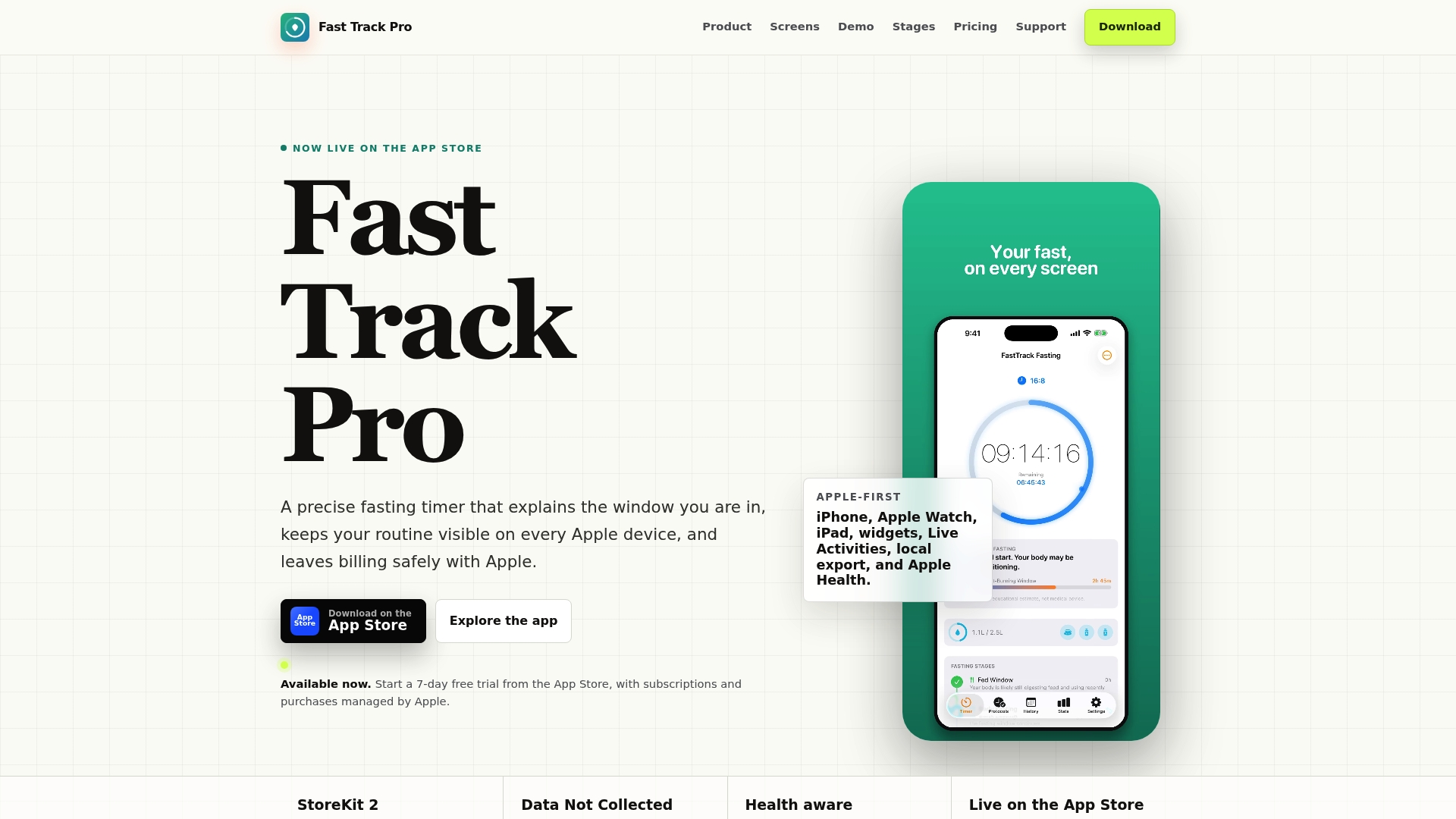
FastTrackPro by Duttlabs is built specifically for Apple devices and includes preset protocols like 16:8, 18:6, and OMAD, so setup takes under a minute. The app displays live fasting zones, tracks your streak automatically, and integrates directly with Apple Health for accurate window detection without manual entry. All data stays on your device with no third-party analytics or ad tracking, which means your health data stays yours. If you want support getting started or configuring your streak settings, the FastTrackPro support page walks you through every feature clearly.
FAQ
What is fasting streak tracking?
Fasting streak tracking is the practice of recording consecutive completed fasting sessions to monitor consistency and motivate adherence to an intermittent fasting protocol.
How often should I review my fasting progress data?
Review weekly stats once per week and monthly trends at the end of each month. Daily chart-checking creates noise rather than useful insight.
Does missing one fasting day reset my progress?
No. Missing a single day does not erase metabolic adaptations, which accumulate over weeks and months. Use the "allow 1 miss" rule to keep your streak intact and your motivation steady.
What fasting protocol should beginners start with?
Beginners should start with the 16:8 protocol, where the 12–14 hour mark triggers the metabolic switch to fat oxidation and autophagy increases noticeably after 16 hours.
What metrics matter most when tracking fasting progress?
Weekly adherence score, average fasting duration, and qualitative notes on energy and hunger matter more than raw streak count. An 80% weekly adherence rate is the benchmark linked to meaningful metabolic improvements within 8–12 weeks.