
Fasting triggers fat burning through a process called metabolic switching, where your body exhausts its stored glucose and shifts to burning fat for fuel. This switch begins after liver glycogen depletes, typically within 12–16 hours of your last meal. Fat oxidation rises from roughly 52%–55% in the post-absorptive state to 63%–68% after a 36-hour fast. That jump is not random. It is the result of a coordinated hormonal response involving insulin, glucagon, and adrenaline working together to unlock stored fat. Understanding why fasting triggers fat burning gives you a clear picture of what is actually happening inside your body, and how to make it work for you.
Why fasting triggers fat burning: metabolic switching explained
Metabolic switching is the biological process your body uses to change its primary fuel source from glucose to fat. It does not happen instantly. Your liver stores glucose as glycogen, and that reserve must be depleted before the switch occurs.
The depletion timeline runs roughly 12–16 hours after your last meal. Once glycogen runs low, insulin levels drop sharply. Glucagon rises in response, signaling fat cells to release stored fatty acids into the bloodstream. Your liver then converts some of those fatty acids into ketone bodies, which your brain and muscles can use as fuel. This is the beginning of nutritional ketosis, a state where fat becomes the dominant energy source.
Here is what changes during this metabolic shift:
- Glucose availability drops, forcing cells to find an alternative fuel
- Insulin falls, removing the primary signal that tells your body to store fat
- Glucagon rises, activating enzymes that break down fat in adipose tissue
- Fatty acid oxidation increases, with fat contributing a larger share of your total energy output
- Ketone production begins, providing a clean fuel source for the brain
Pro Tip: A late-night snack, even a small one, resets your liver glycogen and delays fat burning onset. If you want to hit the metabolic switch faster, finish eating earlier in the evening.
The shift in substrate utilization is measurable and meaningful. Your body does not guess when to switch fuels. It responds to precise hormonal signals, and fasting is the most reliable way to trigger those signals consistently.
How hormones coordinate fat breakdown during fasting
Hormones are the real drivers of fat burning during a fast. The process is not passive. It is an active, coordinated response that your body has used for survival throughout human evolution.

When you stop eating, insulin drops first. Insulin is the primary fat-storage hormone. When it falls, the brake on fat breakdown is released. Hormonal changes during fasting, including decreased insulin and increased glucagon, adrenaline, and glucocorticoids, coordinate lipolysis and ketone body production in a conserved survival mechanism.
Each hormone plays a specific role:
- Insulin falls within hours of your last meal, removing the signal to store fat
- Glucagon rises to stimulate the liver to release glucose and later to promote fat breakdown
- Adrenaline activates hormone-sensitive lipase, the enzyme that breaks triglycerides into free fatty acids
- Glucocorticoids support sustained fat mobilization during longer fasts
The fasting-induced fat-burning process is not starvation. It is a precise, evolutionarily conserved hormonal survival response that coordinates multiple hormones to keep you fueled and functional when food is unavailable.
A common misconception is that fasting puts your body into "starvation mode," where metabolism slows and muscle breaks down. That fear is largely overstated for typical fasting durations. Fasting improves metabolic flexibility and reduces insulin production, which can naturally reduce cravings and support fat burning. Starvation-mode effects are associated with prolonged, severe caloric restriction, not a 16-hour or even 24-hour fast.
The hormonal cooperation during fasting is what makes it effective. No single hormone acts alone. The system is designed to keep you energized, mentally clear, and physically capable even without food.
Which fasting protocols burn the most fat?
Not all fasting approaches produce the same fat-burning results. The protocol you choose affects how much total fat you lose, which type of fat you target, and how sustainable the practice is over time.
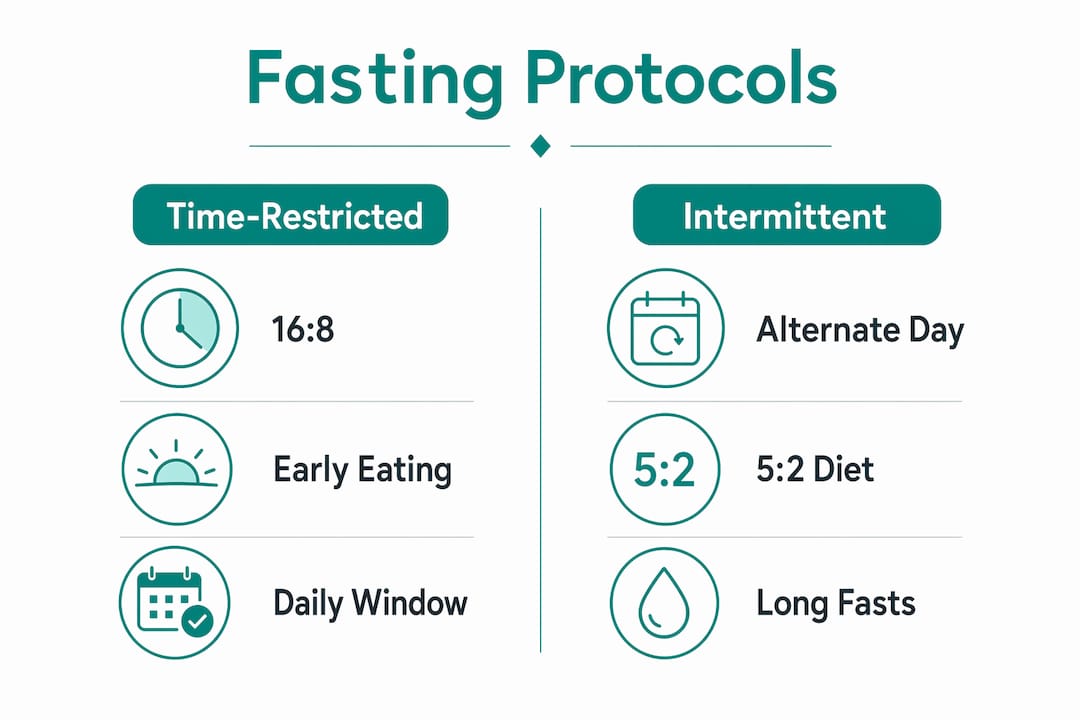
| Fasting Protocol | Typical Duration | Primary Fat Impact | Notes |
|---|---|---|---|
| Time-restricted eating (16:8, 18:6) | Daily | General fat mass reduction | Most sustainable for beginners |
| 5:2 diet | Weekly cycles | Visceral fat reduction | Two low-calorie days per week |
| Alternate day fasting (ADF) | Every other day | Pronounced visceral fat loss | Higher adherence challenge |
| OMAD (one meal a day) | Daily | Aggressive fat oxidation | Requires careful nutrition planning |
Alternate day fasting and the 5:2 diet tend to reduce visceral fat more pronouncedly than time-restricted eating. Visceral fat, the fat stored around your organs, carries the highest metabolic risk. Targeting it specifically matters for long-term health, not just appearance.
Clinical trials show that consistent intermittent fasting leads to weight loss of 4%–8% of baseline body weight and roughly 16% fat mass reduction over six months. Peak results typically appear around 12 weeks of consistent practice. That timeline sets a realistic expectation: fat loss from fasting is steady, not sudden.
Longer fasts increase fat oxidation, but they also carry greater risks, including electrolyte imbalance and muscle loss if protein intake is insufficient. The goal is to find the protocol that keeps you in a fat-burning state long enough to matter, without creating deficits that backfire.
Pro Tip: Combining fasting with resistance training preserves lean muscle while maximizing fat use. Even two strength sessions per week signals your body to protect muscle tissue during the fasted state.
Common mistakes that slow fat burning during a fast
Fasting is not a metabolic shortcut. Several common errors prevent people from getting the fat-burning results they expect.
The biggest misconception is that fasting burns fat regardless of what you eat during your eating window. Fasting-induced weight loss results fundamentally from caloric intake reduction. When calories are matched, fasting produces similar outcomes to continuous caloric restriction. The structure fasting provides is its primary advantage, not some unique metabolic magic.
Watch out for these common pitfalls:
- Eating too close to bedtime resets liver glycogen and delays the metabolic switch, pushing fat burning onset further into the next day
- Poor nutrition during eating windows undermines results; ultra-processed foods spike insulin and reduce the hormonal benefits of fasting
- Excessive restriction risks slowing metabolism and preferential lean mass loss over fat loss, especially without adequate protein
- Ignoring individual variability leads to frustration; fat oxidation rates differ based on age, fitness level, and metabolic health
- Skipping resistance training increases muscle loss risk, since fasting alone without strength exercise removes the signal to preserve lean tissue
Fasting works best as a structured eating pattern, not as an extreme restriction strategy. The American Medical Association notes that fasting is not superior to other calorie-controlled diets when total intake is equal. What fasting does well is make calorie control easier for many people by narrowing the eating window and reducing insulin-driven hunger.
Key Takeaways
Fasting triggers fat burning by depleting liver glycogen, dropping insulin, and activating a hormonal cascade that shifts your body's fuel source from glucose to stored fat.
| Point | Details |
|---|---|
| Metabolic switching timeline | Fat burning begins after 12–16 hours, once liver glycogen is depleted. |
| Fat oxidation increase | Fat's share of energy rises from roughly 52%–55% to 63%–68% after extended fasting. |
| Hormonal coordination | Insulin drops, glucagon and adrenaline rise, and lipolysis activates in sequence. |
| Protocol choice matters | ADF and 5:2 diets target visceral fat more effectively than time-restricted eating alone. |
| Resistance training is critical | Combining fasting with strength exercise preserves muscle and maximizes fat loss. |
What I've learned after years of watching people fast
Most people who start fasting focus entirely on the clock. They count hours obsessively and feel frustrated when the scale doesn't move fast enough. What I've observed is that the clock is the least important variable.
The real driver of results is hormonal consistency. If you eat a large, carb-heavy meal at 10 PM and start your fast at 11 PM, you are not getting 16 hours of fat burning. You are getting maybe 8 hours of actual metabolic switching before your next meal. The quality and timing of your last meal before a fast matter as much as the fast itself.
I've also seen people treat fasting as a license to eat poorly during their eating window. That approach fails every time. The structure of fasting is genuinely useful for reducing insulin spikes and managing hunger, but it cannot override a diet built on refined carbohydrates and excess calories. The structure fasting provides is the benefit, not the fasting duration alone.
The most consistent results I've seen come from people who combine a moderate fasting window, typically 16:8, with two to three resistance training sessions per week and a protein-focused eating window. They don't obsess over the exact hour they break their fast. They focus on what they eat and how they move. That combination respects the biology and produces results that last beyond 12 weeks.
Realistic expectations matter too. Peak weight loss effects in clinical trials appear at around 12 weeks. If you're three weeks in and feeling discouraged, you're not failing. You're still in the early phase of a process that takes time to compound.
— Shankar
How Fast Track Pro supports your fasting goals
Knowing the science behind fat burning is one thing. Applying it consistently is another. Duttlabs built Fast Track Pro specifically for people who want clear, honest visibility into their fasting progress on Apple devices.
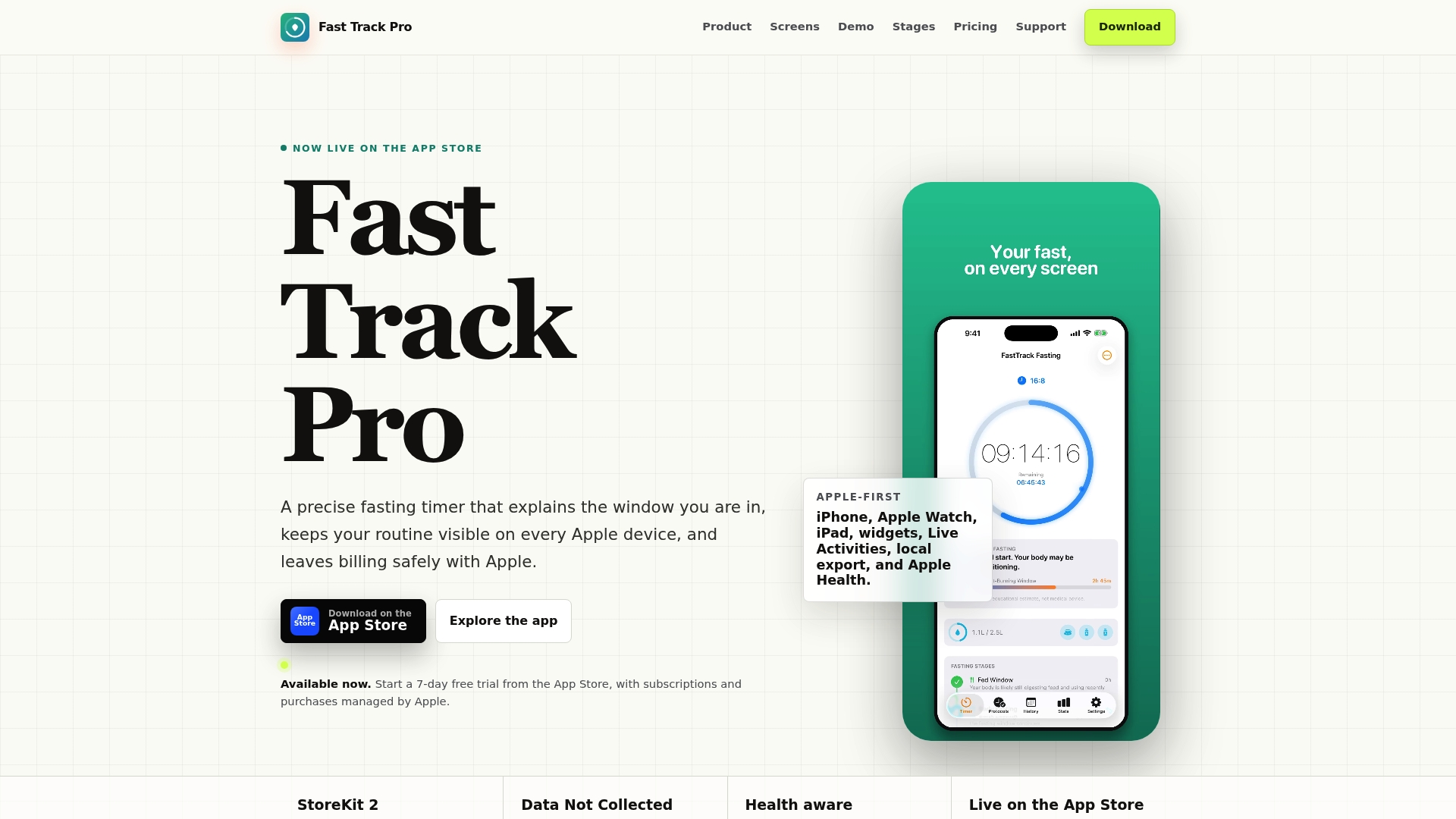
Fast Track Pro shows you exactly where you are in your fasting window, including the metabolic stages that matter most for fat burning. It supports preset protocols like 16:8, 18:6, and OMAD, so you can start without any setup friction. The app integrates with Apple Health, stores all data locally, and uses no third-party analytics or ad tracking. Your fasting data stays yours. If you have questions about the app, the support page covers everything you need to get started confidently.
FAQ
Why does fasting trigger fat burning instead of muscle loss?
Fasting primarily triggers fat burning because falling insulin levels activate lipolysis in fat tissue before muscle protein is targeted. Adding resistance training further signals your body to protect lean muscle during the fasted state.
How long does it take for fasting to start burning fat?
Fat burning accelerates after liver glycogen depletes, which typically takes 12–16 hours after your last meal. The exact timing depends on the size and composition of your last meal.
Does fasting promote ketosis?
Yes. Once liver glycogen is depleted and fat oxidation rises, the liver converts fatty acids into ketone bodies. This marks the beginning of nutritional ketosis, where fat becomes the dominant fuel source.
Is intermittent fasting better than regular calorie restriction for fat loss?
Clinical evidence shows that fasting produces similar fat loss to continuous calorie restriction when total calories are matched. Fasting's main advantage is the structure it provides, which makes calorie control easier for many people.
What fasting protocol burns the most visceral fat?
Alternate day fasting and the 5:2 diet show stronger reductions in visceral fat compared to time-restricted eating. Visceral fat is the metabolically active fat stored around your organs, and targeting it carries significant health benefits.